
Understanding Your Fertile Window: What Every Woman Trying to Conceive Should Know
When you’re trying to conceive, one of the most important things you can do is learn to recognise and track your fertile window—the few days each cycle when pregnancy is most likely to occur.
Your fertile window typically spans 5–6 days, beginning a few days before ovulation and ending on the day of ovulation itself. This is because sperm can live inside the female reproductive tract for up to 5 days, but the egg only survives for about 12–24 hours after ovulation.
Understanding and tracking your body’s natural fertility signs gives you a powerful tool to support conception naturally, while also deepening your connection with your body and cycle.
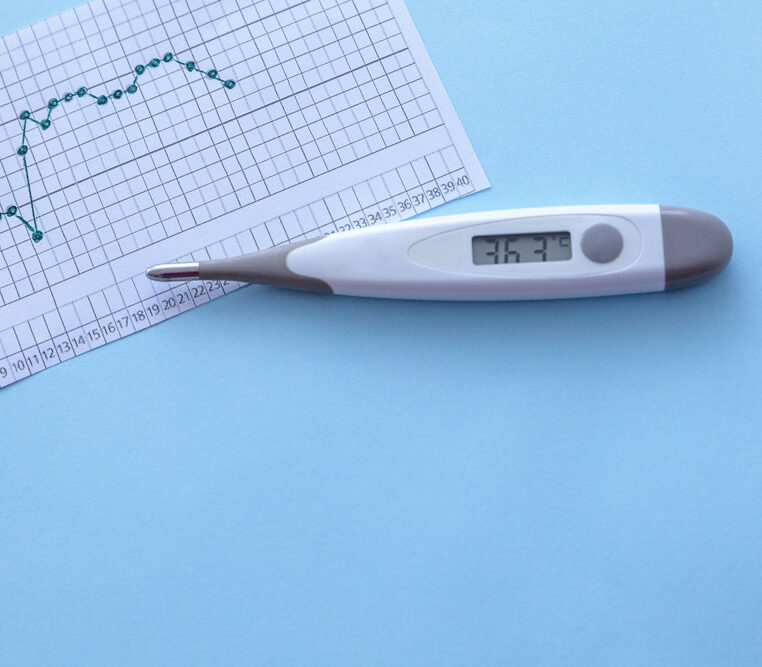
1. Basal Body Temperature (BBT)
Your BBT is your body’s resting temperature, taken first thing in the morning before you get out of bed, speak, or even sit up. It’s influenced by your hormones, and carefully tracking it can help you confirm ovulation has occurred.
Before ovulation: BBT tends to be lower (around 36.1–36.5°C).
After ovulation: Progesterone causes a rise of 0.2–0.5°C. The temperature then remains elevated until your next period.
How to track:
Use a digital BBT thermometer with two decimal places.
Take your temperature at the same time each morning (after at least 3–4 hours of uninterrupted sleep).
Record it daily using a chart, app, or notebook.
A sustained temperature rise (lasting at least 3 days) confirms that ovulation has already occurred. This means your fertile window has passed, and timing intercourse afterward will be too late for conception that cycle.
Tip: You won’t know ovulation has happened until after the temperature shift, so combine BBT with the signs below for real-time tracking.
2. Cervical Mucus (CM) Changes
Your cervical mucus naturally changes throughout your cycle due to hormonal shifts, and it offers one of the clearest, real-time signs of approaching ovulation.
Here’s what to look for:
Dry or sticky → Not fertile
Creamy or lotion-like → Low fertility
Watery or clear and stretchy (like raw egg white) → Highly fertile
Egg-white CM is ideal—it helps sperm survive and swim toward the egg.
When to have intercourse:
Begin having sex every other day once you notice mucus becoming creamy or watery.
Increase frequency (daily if possible) when you see egg-white or watery CM, as this indicates ovulation is very close.
Tip: Check mucus by wiping with toilet paper or observing on underwear. You can also gently collect some at the vaginal opening to test for stretchiness.
3. Cervix Position and Texture
As you approach ovulation, your cervix physically changes in position, texture, and openness. These changes can be subtle but are very telling with practice.
Cervical changes through the cycle:
Low, firm, and closed → Not fertile
High, soft, open, and moist → Fertile (ideal conditions for sperm entry)
How to check:
With clean hands and short nails, insert one or two fingers into the vagina and feel for the cervix (it feels like the tip of your nose when firm, and like your lips when soft).
Over time, you’ll learn to recognise what’s “normal” for you and how it changes throughout your cycle.
Tip: Cervical checks aren’t for everyone, and that’s okay—use this if you’re comfortable, or stick with BBT and CM tracking.
Putting It All Together: When to Have Intercourse
To give yourself the best chance of conception, aim to:
Begin having intercourse every other day once you see fertile signs (creamy, watery, or egg-white CM).
Ideally, have intercourse 1–2 days before ovulation and the day of ovulation itself.
Continue until your BBT confirms ovulation has occurred (sustained rise), and CM begins to dry or become sticky again.
How to Know When the Fertile Window Is Over
Your BBT rises and stays high for several days.
Cervical mucus becomes sticky or dry.
Cervix lowers and firms up again.
This signals the end of your most fertile days, and it’s time to rest, reflect, and give your body care as it prepares for either implantation or the next cycle.
Why This Matters
Understanding your cycle is more than a fertility strategy—it’s about reclaiming your connection with your body. When you know what to look for, you’re no longer guessing or feeling out of control. You’re informed, empowered, and able to time intercourse with precision and care.
This kind of body literacy is something many of us were never taught—and yet, it’s foundational to not just conception, but to understanding our hormonal health at every stage of life.
If you’re on this journey with me, you don’t have to figure it all out alone. I’m here to guide you—through education, hands-on support, and holding space for your emotional well-being as well.
With warmth and encouragement,
Silène
 French
  English